Scammed on a Poker App: How to Get Your Money Back and Avoid It Next Time
Club poker apps are safe as software, but the money moves outside the app — through agents, messengers and crypto wallets. That gap is where scammers work. Here are the schemes that cost players money most often, what to do in the first hours after you realise you were scammed, and the habits that make you a hard target.
Updated: 16 October 2026
Key takeaways
Most scams in poker apps happen outside the app: in messengers, through fake agents and off-app payments.
Joining a club is always free, there are no promo codes for free chips, and real staff never ask for your password or email code.
If you were scammed: stop paying, secure your account, save evidence, go to the club manager or union, and contact your bank if you paid by card or transfer.
Crypto payments can’t be reversed — so check the agent before you pay, not after.
0 $the cost of joining a club — paying for an ID is a scam
0promo codes for free chips with real value
0reasons to share your password or email code
1official source per app: the store or the developer’s site
Why club poker apps attract scammers
On a licensed poker site, you deposit through a cashier and the site answers for your money. In ClubGG, PPPoker, PokerBros, X-Poker or Pokerrrr 2 there is no cashier: you pay an agent directly, often in a messenger, often in crypto, and the agent credits chips inside the club. The app never sees the money, so it can’t refund it — and scammers know it.
Contacta DM, an ad or a group chat
The hooka bonus, a cheap rate or a “private club”
Paymentoff-app, usually irreversible
Goneblocked, account deleted
How almost every poker-app scam unfolds
The good news: almost every scam follows the same pattern, and each step has a check that breaks it. You don’t need to be paranoid — you need to know which three or four questions to ask before money leaves your wallet.
The most common scams
Fake agentSomeone copies a real agent’s nickname and avatar in a messenger and takes your deposit. The real agent has never heard of you.
“Pay for the club ID”A club ID is free information. Anyone selling “access”, an “entry fee” or a “VIP invite” is a scammer.
Free-chip codes“Enter your login to receive bonus chips.” There are no such codes — it’s phishing for your password and email code.
Modded appsA “hacked ClubGG”, a chip generator or a “see-cards” app. At best it’s useless, at worst it steals your account.
Exit scamA club or agent collects deposits for weeks, pays small withdrawals to build trust, then vanishes with everything.
Cheap chips or diamonds“Chips at half price” or diamonds below the store price, prepaid with no escrow. Payment goes out, nothing comes in.
“Unlock your withdrawal”You’re told to pay a “fee”, “tax” or “verification deposit” before you can cash out. Then there’s another fee. Then another.
Fake supportA message from “ClubGG administration” or “PPPoker security” in a messenger. The apps don’t contact players that way.
Fake agents: how to check who you’re paying
This is the scam that catches experienced players, because everything looks right: the nickname, the avatar, even the club ID. The difference is that the real agent is inside the club, and the fake one only exists in your messenger.
1
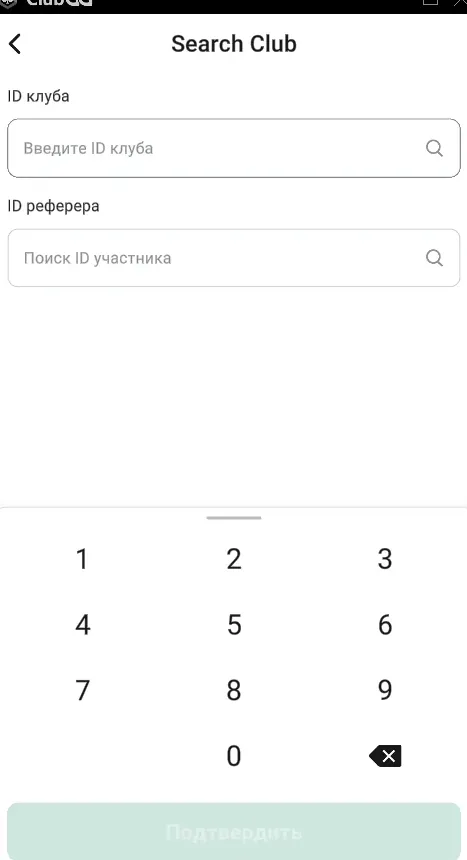
Get the agent’s in-app player ID, not just a messenger handle. In ClubGG it’s the ID you enter in the “Referrer ID” field when you join.
2
Join the club first and wait for approval. A real agent approves your request and can see you in their downline — a fake one can’t.
3
Confirm through the club: ask the manager or check the club’s official channel that this person is their agent.
4
Make the first deposit small. Play, then make a small test withdrawal before sending more.
If “the agent” messages you first, offers a bonus you didn’t ask about and wants the money before your join request is approved — stop. That’s the classic fake-agent script.
Phishing: passwords, email codes and fake apps
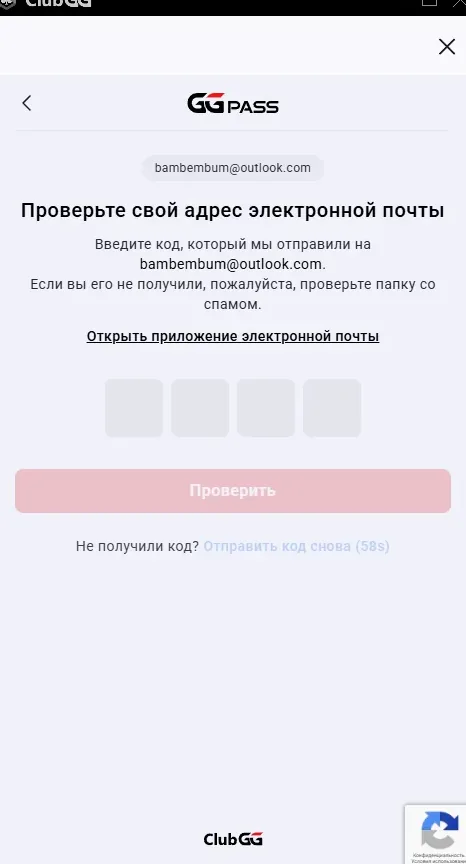
In ClubGG your account is a GGPass account — the same login works for GGPoker. Logging in from a new device is confirmed with a code sent to your email. Whoever has the password and that code has your account, your club balances and your history. That’s why scammers ask for them under any pretext: “to credit the bonus”, “to verify you”, “to unlock the withdrawal”.
The email confirmation code screen in ClubGG. This code is for you only — never send it to anyone
Never
Send your password or an email code to anyone — not support, not an agent, not a “bonus manager”.
Log in through a link someone sent you — open the app directly.
Install an APK from a chat or a random site. ClubGG installs from the stores or clubgg.com, PPPoker from the stores or pppoker.net.
Install “helpers”, chip generators or apps that promise to show opponents’ cards.
How to set up a secure ClubGG account from the start — a separate password, an email you control — is covered in ClubGG registration. Why free-chip codes don’t exist: ClubGG bonus codes.
Exit scams and dying clubs: the warning signs
An exit scam is slow. The club runs normally for a while, pays out small amounts quickly, then starts stalling — and one day the agent’s account is gone. The signs usually show up weeks before.
Withdrawals that used to take hours now take days, with new excuses each time.
Sudden aggressive deposit bonuses — the club is trying to pull in as much cash as possible.
Pressure: “deposit now, the bonus expires tonight”.
New limits on withdrawals that weren’t in the rules when you joined.
The agent asks you to pay a different person or a new wallet “for this week only”.
Fewer tables running, regulars disappearing, the manager not answering.
If you see two or more of these, withdraw what you can and stop depositing. Losing a rakeback week is cheaper than losing the balance.
Already scammed? What to do now
1
Stop paying. Don’t send a “fee to release the funds” or a “deposit to prove you’re real”. Every extra payment is lost too.
2
Secure your account if you shared a password or code: change the password, check the email linked to the account, and log out of other devices.
3
Save the evidence: the full chat, the scammer’s profile and handle, payment receipts or transaction hashes, wallet addresses, and screenshots of your club balance.Нужен скриншотChat with a fake agent: the payment request with a wallet address and the agent’s profile
4
Report inside the club: tell the club manager or owner, and the union if there is one. If the scammer posed as their agent, they need to know — and some clubs and unions compensate players.
5
Contact your bank or payment provider right away if you paid by card, bank transfer or e-wallet. Ask what dispute options they have.
6
Report the account to the app’s support and to the messenger where the scam happened, and file a report with the police in your country.
7
Warn others: a review of the club or agent stops the next person from paying the same scammer.
Watch out for “recovery” offers. After a scam, people often get messages from “hackers” or “agencies” who promise to get the money back for an upfront fee. That’s a second scam aimed at the same victim.
Can you get the money back?
Honestly: it depends on how you paid and on whether the club behind the scam is still around. The payment method decides whether there is anyone to ask for a reversal.
How you paid
Can it be reversed?
What to do
Crypto (USDT and others)
No — blockchain transfers are final
Save the transaction hash and wallet address; go to the club and union
Bank card
Sometimes, through your bank’s dispute process
Call your bank immediately and ask about a dispute
Bank transfer
Rarely, and only if you act fast
Contact your bank the same day
E-wallet
Depends on the provider’s rules
Open a dispute in the wallet’s support
Paid a real agent of a real club
Possibly, through the club or union
Escalate: agent → manager → union
The best outcomes happen when the scammer posed as part of a real, active club: a reputable club has every reason to fix it. When the “club” was fake from the start, recovery is unlikely — which is why the checks before paying matter so much.
Prevention checklist
Before every first deposit
You joined the club by its ID and your request was approved — before paying.
The agent’s in-app ID matches the referrer ID you entered, and the club confirms them.
You know the chip rate, the minimum deposit, the withdrawal time and any fees — in writing.
Your first deposit is small, and you’ve planned a test withdrawal.
The app came from an official store or the developer’s site.
Your password is unique and your email is secured.
Walk away if
Anyone asks money for a club ID, an invite or “access”.
Anyone asks for your password or an email code.
You’re pressured to pay fast or to pay a fee before withdrawing.
The deal is far better than anyone else offers — chips or diamonds “at half price”.
Scammers look for players who pick the first club ID they find in a group chat. Choosing a club with a public history — reviews about payouts and disputes, a known union — removes most of the risk before it starts.
01Will ClubGG or PPPoker refund money I lost to a scammer?
Usually not: the money moved outside the app, between you and the scammer. Support can help secure a hacked account and act on reports, but refunds come — if at all — from the club, the union or your bank.
02Is it a scam if someone asks me to pay for a club ID?
Yes. Joining a club is always free, and club IDs aren’t sold. You only pay for the chips you deposit with the club’s agent.
03Do free chip codes for ClubGG or PPPoker exist?
No. Club chips are issued only by the club’s agent. Real bonuses — rakeback, leaderboards, deposit bonuses — come from the club, not from a code.
04Someone asked for my email code to send me a bonus. What now?
Don’t send it. If you already did, change your password immediately, check the email on your account and log out of all other devices.
05Can I get crypto back after paying a scammer?
Not by reversing the transfer — blockchain payments are final. Save the transaction hash and wallet address and escalate to the club and union if the scammer used their name.
06How do I tell a real agent from a fake one?
A real agent has an in-app ID inside the club, can approve you into their downline, and is confirmed by the club manager. A fake one exists only in your messenger.





 MOJO 2 4.5 · rakeback 50% · Massive Poker Union2
 MOJO 1No reviews yet · rakeback 50% · AllinUnion3
 Mr Pink PantherNo reviews yet · rakeback 40%4
 ZerakeNo reviews yet · rakeback Zero Rake5
 POKER VIBE UANo reviews yet · rakeback 40%All clubs in the catalog