Are Poker Apps Rigged? ClubGG, PPPoker, PokerBros and Others
Every poker player has had the session where the river seems to know their cards. In club apps that feeling is even more common — and so are threads titled “is this app rigged?”. Here’s what we know about how the apps shuffle, what certification means, why variance feels harsher on mobile, and where the real risks are.
Updated: 16 October 2026
Key takeaways
There are no confirmed cases of the shuffle being rigged in ClubGG, PPPoker, PokerBros or the other major club apps.
ClubGG’s RNG is certified by BMM Testlabs; PokerBros shows BMM Testlabs and iTech Labs logos; Pokerrrr 2 states Gaming Labs certification.
Fast tables, short-handed games, PLO and bomb pots mean more all-ins per hour — so more bad beats, not a rigged deck.
The real risks are people: collusion, bots, real-time assistants and dishonest agents. Choose moderated clubs.
~82%AA wins all-in preflop against KK
1 in 5–6times KK still beats AA in that spot
~35%a 9-out flush draw on the flop hits by the river
BMMTestlabs certified ClubGG’s random number generator
The short answer
Rigging the shuffle would be the fastest way for an app to destroy itself: the deal is the one part of the game every player watches, and hand histories make patterns easy to analyse. The apps don’t make their money from who wins a pot — club apps earn from service items and memberships, and clubs earn from rake whoever wins. What can be unfair is who you’re playing against and who holds your money. That’s where to focus.
The shuffleRun by the app’s random number generator. Clubs set games, blinds and rake — not the order of the cards.
The playersCollusion, bots and real-time assistants are the real threat, and clubs differ hugely in how well they police them.
The moneyDeposits and withdrawals go through agents. A dishonest agent costs more than any bad beat.
How a poker RNG works and who certifies it
A random number generator (RNG) decides the order of the deck before each hand. Independent testing labs check that the output is statistically random and unpredictable, and that the shuffle isn’t biased. A certificate says the RNG passed that testing; it doesn’t say anything about collusion at the tables or about the club holding your chips.
Known for very loose, gambly games — big swings are normal
PokerBros store screenshot with BMM Testlabs and iTech Labs logos
“No certificate found” doesn’t mean “rigged” — it means you’re relying on the app’s track record instead of an audit. For ClubGG specifically, see is ClubGG legit and fair.
Why it feels rigged: variance on fast tables
Most “rigged” complaints come from real math playing out faster than our intuition expects. Club apps make it faster still.
More hands per hourQuick tables, short time banks and multi-tabling mean you see more hands — and more coolers — in a session than at a live table.
Short-handed games6-max and heads-up tables put you in more pots with wider ranges and more all-ins.
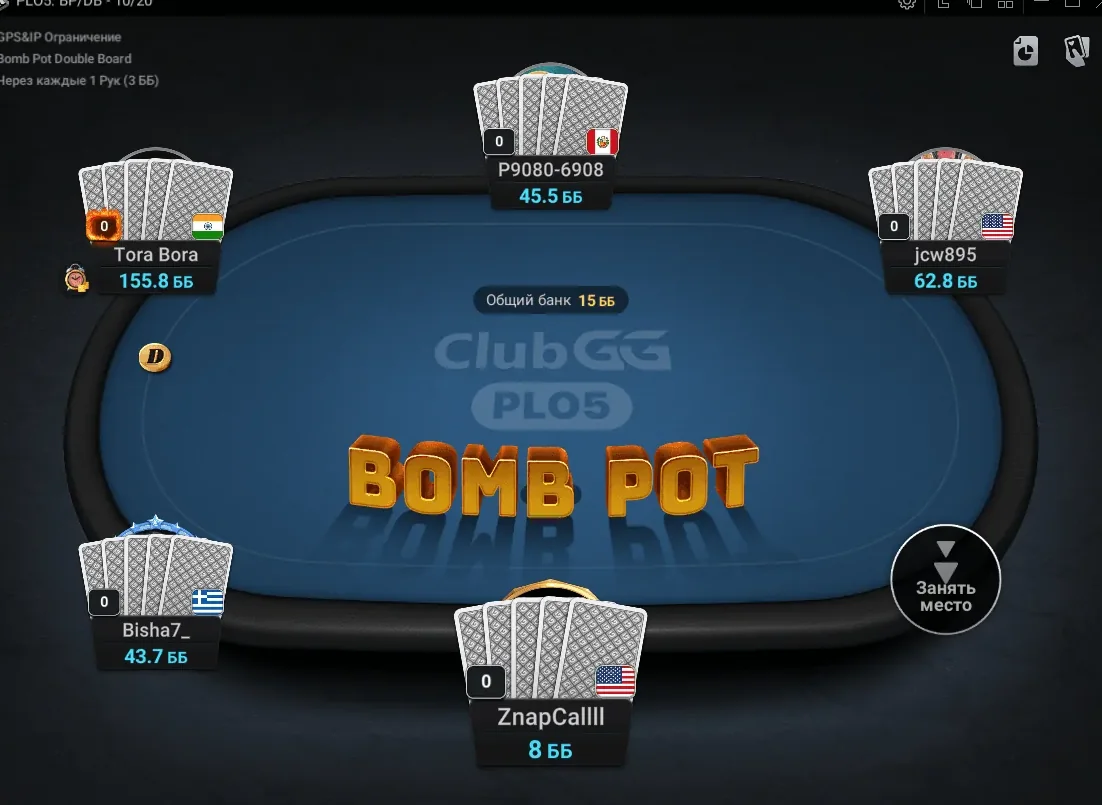
PLO and bomb potsIn Omaha, pre-flop favourites are much smaller than in Hold’em, and bomb pots build big pots from the first street. Swings get wider.
Memory biasYou remember the set that lost on the river, not the twenty times you won the same spot. Losses stick, wins blur.
The numbers behind “impossible” beats
Spot
How often the favourite wins
How often it loses
AA vs KK all-in preflop
About 82%
About 18% — 1 time in 5–6
Flush draw (9 outs) on the flop vs a made hand
The made hand holds about 65%
The draw gets there about 35%
Open-ended straight draw (8 outs) on the flop
The made hand holds about 69%
The draw gets there about 31%
QQ vs AK all-in preflop
Only slightly more than half
Close to a coin flip
Play a few thousand hands and an 18% underdog will win dozens of times. Each one feels personal; together they’re exactly what the math predicts. More on this in poker variance explained.
“Rigged for action”: does the app want more all-ins?
The theory goes: apps deal big hands against each other to create big pots and more rake. But in club apps the rake goes to the club, not the app, and the clubs set the rake — they don’t control the deck. A club’s table settings cover the game, blinds, rake, seats and extras like straddles or bomb pots. Nothing in those settings touches the order of the cards.
What does create action is the game format. A table with mandatory straddles, bomb pots or PLO5 will produce more coolers than full-ring Hold’em, because the format puts more money in with more cards. If you want smaller swings, pick quieter formats.
PLO5 with a bomb pot in ClubGG: everyone posts an ante and the action starts on the flop — big pots and big swings by design
How to check yourself: all-in EV
The most useful test is your own data. All-in EV is what you would have won if every all-in had paid out at its exact equity instead of one random runout. If your real results run well below that line over a long stretch, you’ve been unlucky; if the lines are close, the deal is behaving as it should.
All-ine.g. AA vs KK, $100 pot
Your equityabout 82%
All-in EVabout $82 credited, win or lose
Comparereal results vs the EV line
All-in EV counts your share of the pot, not the luck of the runout
1
Open your stats. In ClubGG that’s PokerCraft, which saves every hand and draws a winnings graph with an all-in EV line.Нужен скриншотPokerCraft winnings graph: real result line and the all-in EV line over several thousand hands
2
Look at a long sample — several thousand hands at least. A few hundred hands prove nothing either way.
3
Compare the two lines. Close together = normal variance. Real line far below EV = you’ve run bad, which happens to everyone over some stretches.
4
Review the biggest pots in the replayer. Were you all-in ahead, or did you get it in behind?
Tip: the all-in EV line only covers all-ins. Losing because you called too much on the river is a strategy leak, not bad luck — the replayer shows which one it was.
The real risks: people, not the deck
CollusionTwo or more players share information or squeeze others out of pots. The most common form of cheating in clubs.
BotsSoftware playing for a person. ClubGG reviews accounts for bots and bans them; weakly moderated clubs are where they survive.
Real-time assistantsSolvers or helpers used during play. Banned in ClubGG and in most serious clubs.
Dishonest agentsSlow or missing withdrawals, changing terms, exit scams. The money risk is bigger than any table risk.
Bad luck is random. Cheating usually leaves patterns. These are worth reporting to the club — with hand numbers.
The same two players are always seated together and never put pressure on each other.
A player keeps making folds or calls that only make sense if they knew your cards.
Accounts that play around the clock with identical timing and bet sizes.
A table that keeps filling with the same group as soon as you sit down.
The club ignores reports and keeps no visible rules on software and collusion.
What a fair, safe setup looks like
An app with a certified RNG and hand histories you can review.
Tables with GPS / IP restrictions where the club offers them.
A club that answers reports, names its software rules and bans cheaters.
An agent with a track record of paying on time.
Which apps to trust
If transparency matters most to you, ClubGG combines a BMM-certified RNG with PokerCraft’s all-in EV graphs, so you can check your own luck. Whatever the app, the choice of club decides how safe the tables and the money are.
There are no confirmed cases. ClubGG’s RNG is certified by BMM Testlabs, and you can check your own results against all-in EV in PokerCraft.
02Is PPPoker rigged?
There have been no confirmed RNG-rigging scandals. We haven’t found a published RNG certificate for PPPoker; the real risks there are dishonest agents and team play in poorly moderated clubs.
03Is PokerBros rigged?
No confirmed rigging. PokerBros advertises a certified RNG, with BMM Testlabs and iTech Labs logos in its store screenshots.
04Why do I get so many bad beats in poker apps?
Fast tables, short-handed games, PLO and bomb pots produce more all-ins per hour. More all-ins mean more bad beats in absolute numbers — the percentages stay the same.
05How can I check whether I’m unlucky or the deal is unfair?
Compare your real results to your all-in EV over several thousand hands. If the lines are close, it’s variance.
06Can a club owner control which cards are dealt?
Clubs set the game, blinds, rake and table options — not the shuffle, which is run by the app’s random number generator.






 X-PokerReviews & guide
 MOJO 2 4.5 · rakeback 50% · Massive Poker Union2
 MOJO 1No reviews yet · rakeback 50% · AllinUnion3
 Mr Pink PantherNo reviews yet · rakeback 40%4
 ZerakeNo reviews yet · rakeback Zero Rake5
 POKER VIBE UANo reviews yet · rakeback 40%All clubs in the catalog