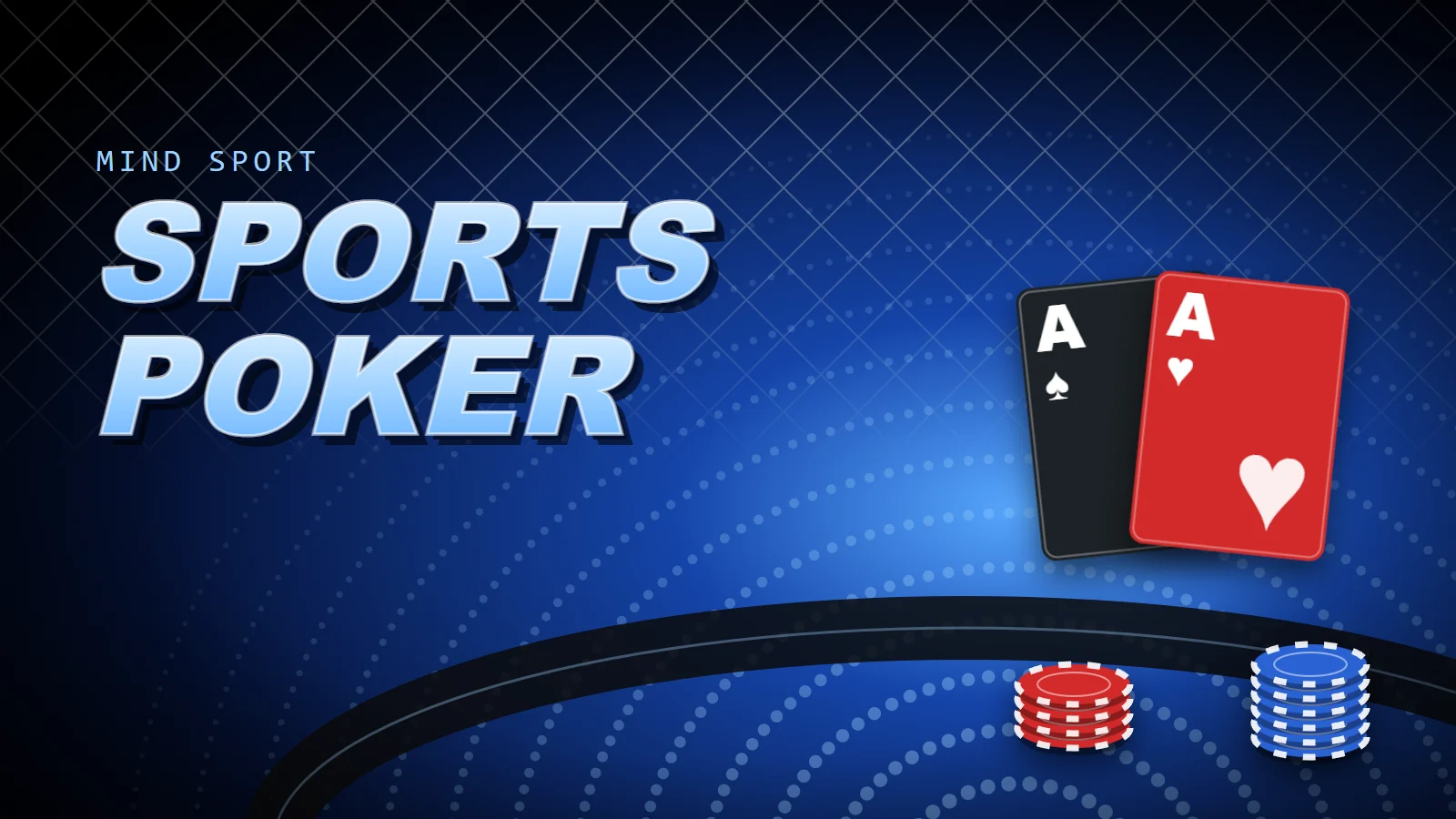


Sports Poker: Poker as a Mind Sport, Tournaments and Championships (2026)
“Sports poker” is the idea that poker is a competition of skill — like chess or bridge — rather than a casino game. In practice it means tournaments: everyone pays the same entry, gets the same chips and plays for places. Here is what the term really covers, where it came from, how tournaments and championships work and which skills decide the result.
Updated: 20 October 2026- Sports poker treats poker as a mind sport: players compete on equal terms and the result depends on decisions over many hands.
- The typical format is a tournament: a fixed buy-in, an equal starting stack, rising blinds and prizes for the top places.
- In Russia sports poker was briefly recognised as an official sport in the late 2000s and then removed from the register; today poker for money is treated as gambling there.
- Short-term luck is large, but over hundreds of tournaments skill shows — that is the core argument for poker as a sport.
What is sports poker
“Sports poker” is not a separate game with its own rules. It is a way of looking at ordinary poker — usually Texas Hold’em — as a competition between players. Supporters of the term compare it with chess, draughts and bridge: everyone starts in the same position, there is no house to play against, and long-term results depend on the quality of decisions.
In practice “sports poker” almost always means tournament poker. Every participant pays the same entry fee (or plays for free), receives the same number of chips and plays until one player holds them all. Places are ranked like in any sport, and prizes, points or titles go to the top finishers.
Skill or luck: is poker a sport?
The main question behind sports poker is how much of the result comes from skill. In a single hand luck dominates: a beginner can win an all-in against a professional. But poker is played over thousands of hands and hundreds of tournaments, and over that distance better decisions produce better results.
Both sides are right in their own way: poker combines a large random element with a real skill edge. How strongly short-term luck affects results is explained in our guide to poker variance.
The history of sports poker in Russia
In Russia the term became widely known in the second half of the 2000s. Enthusiasts created a sports poker federation, and in the late 2000s sports poker was briefly included in the official register of sports. This gave rise to clubs and tournaments that positioned themselves as sporting rather than gambling events.
The status did not last: within a short time sports poker was removed from the register. At about the same period the federal law on state regulation of gambling came fully into force, limiting casinos to special gambling zones. After that, playing poker for money outside those zones was treated as gambling, and most clubs that had operated under the “sports” label closed or changed their format.
International bodies: IFP, IFMP and match poker
Outside Russia there have also been attempts to give poker the status of a mind sport. The best-known is the International Federation of Poker (IFP), founded at the end of the 2000s. It aimed to have poker recognised alongside chess, bridge and draughts and later renamed itself the International Federation of Match Poker (IFMP).
IFMP promotes match poker — a team format with duplicate cards: players at different tables receive the same hands in the same seats, and results are compared between them. The idea is borrowed from duplicate bridge: if everyone gets the same cards, luck matters much less and skill matters much more.
| Regular tournament | Match poker | |
|---|---|---|
| Format | Individual | Usually team-based |
| Cards | Random at every table | Duplicated across tables |
| What is compared | Who keeps the chips longest | How players did with the same cards |
| Role of luck | Large in the short term | Significantly reduced |
How a poker tournament works
- 1You register and pay the buy-in. It usually has two parts: the amount that goes to the prize pool and the organiser’s fee (for example, 100 + 10).
- 2Every player receives the same starting stack — for example, 20,000 chips. Chips have no cash value; they only measure your position in the tournament.
- 3Players are seated at random. The blinds (forced bets) rise on a schedule — every 15, 20 or 30 minutes live, faster online.
- 4Players who lose all their chips are eliminated. Tables are balanced and merged as the field shrinks.
- 5When only the paid places remain, everyone is “in the money”. The tournament continues until one player wins all the chips; prizes are paid according to finishing position.
Formats (MTT, sit-and-go, satellites), rebuys and bounties are covered in detail in our poker tournaments guide — here we focus on what makes the format “sporting”.
Tournament structure: stack, blinds, prize places
| Element | What it is | Typical values |
|---|---|---|
| Buy-in | Entry fee: prize pool part + organiser’s fee | From free (freerolls) to large championship entries |
| Starting stack | Chips each player receives | Usually 100–300 big blinds at the first level |
| Blind level | How long the stakes stay the same | 15–60 minutes live, 3–15 minutes online |
| Ante | Extra forced bet from later levels | Often a “big blind ante” paid by one player |
| Paid places | Share of the field that wins prizes | Usually around 10–15% |
| Payout structure | How the prize pool is split | Top places get the largest share |
The slower the blinds and the deeper the stacks, the more room there is for skill. Fast “turbo” tournaments push players into all-in decisions sooner, which increases the role of luck.
Sports poker vs cash games vs casino games
| Tournament (sports poker) | Cash game | Casino games | |
|---|---|---|---|
| Who you play against | Other players | Other players | The casino |
| Chips | Tournament chips, no cash value | Chips = real money | Chips = real money |
| Entry | One fixed buy-in | Buy in and leave any time | Every bet is a new risk |
| Maximum loss | The buy-in (plus rebuys, if any) | Whatever you bring to the table | Unlimited by format |
| Organiser’s income | Fee from the buy-in | Rake from pots | Built-in house edge |
| Role of skill | Large over a distance | Large over a distance | Minimal or none in most games |
This is the core argument of sports poker supporters: in roulette or slots the house always has the edge, while in poker the organiser takes only a fee and the money moves between players according to their decisions.
Sports poker clubs today
A “sports poker club” today usually means a community that runs regular tournaments: weekly games, seasonal rating tables, a club championship. Where poker for money is restricted, such clubs commonly use formats without a cash prize pool:
- free entry or an entry fee only for venue rental, food or coaching;
- a season-long rating where players earn points for places;
- cups, medals and titles instead of money;
- training sessions and hand reviews alongside the games.
Online, club poker apps such as ClubGG and PPPoker let private clubs run their own tournaments — including free ones for friends. See how to set that up in playing poker online with friends.
Poker championships and tournament series
The biggest poker events are organised as series and festivals: dozens of tournaments over several days or weeks, with a main event at the end. The best-known international brands are WSOP, EPT, WPT and APT; they hold festivals in different countries every year, and online poker rooms run their own large online series.
Dates, venues and buy-ins change every season, so always check the organiser’s official schedule. Live series in Russia take place in the legal gambling zones — mostly in Sochi; details are in our article on poker in Russia.
Skills that matter in sports poker
If you are just starting, learn the rules and hand rankings first in how to learn poker, then move on to tournament strategy.
How to start playing tournaments
- A simple plan for a beginner
- Learn the rules of Texas Hold’em and the hand rankings.
- Play free tournaments and freerolls — see our freerolls guide and how to play poker free online.
- Choose tournaments with slower blinds and deeper stacks: they give more room for skill.
- Keep a record of results — in tournaments you judge yourself over dozens of events, not one.
- If you play for money, do so only where it is legal and with an amount you can afford to lose.
- Common beginner mistakes
- Playing too many hands in the early levels.
- Ignoring stack size in big blinds.
- Judging your skill by a single tournament.
- Entering tournaments with a buy-in that is too big for your bankroll.
Online poker tournaments
Online tournaments run around the clock: from freerolls to large weekly events. Large poker rooms publish full schedules, and club apps let private clubs run their own tournaments. Before playing for money, check that online poker is legal where you live — compare options in our poker rooms rating and where to play poker for money.
ClubGG clubs from our catalog
Many ClubGG clubs run their own tournaments. Clubs are ranked by player reviews; each page lists games and conditions.

FAQ
01What is sports poker?
It is poker viewed as a mind sport: a competition between players on equal terms, usually in tournament format with a fixed entry and ranking by places.
02Is sports poker an official sport in Russia?
It was briefly included in the official register of sports in the late 2000s and then removed. Today poker for money in Russia is regulated as gambling.
03Is poker a game of skill or luck?
Both. Luck strongly affects single hands and tournaments, but over a long distance better decisions lead to better results.
04How is a tournament different from a cash game?
In a tournament you pay one buy-in, get tournament chips without cash value and play for places. In a cash game chips equal money and you can leave any time.
05What is match poker?
A team format promoted by IFMP in which players at different tables receive the same cards, so results can be compared and luck is reduced.
06What does a sports poker club do?
It runs regular tournaments and rating seasons; where poker for money is restricted, clubs often play without a cash prize pool.
07How many players get paid in a tournament?
Usually around 10–15% of the field; the top places receive the largest share of the prize pool.
Read next
 How to Play Poker Online with Friends: Your Own ClubGG Club and a No-Rake Table (2026)Read
 Triton Poker: the Super High Roller Series Explained (2026)Read
 Poker Calculator: Free Odds, Equity, ICM and Bankroll Tools Explained (2026)Read
 Famous Poker Players: Legends, the “King of Poker” and Today’s StarsRead
 History of Poker: Where the Word Comes From, How the Game Spread and the Moneymaker EffectRead



 Poker on Android: The Best Apps and How to Play on Your PhoneRead